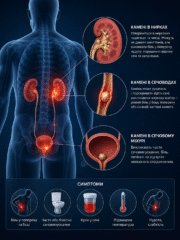
Removal of stones from the kidneys and bladder
Urolithiasis is a condition in which dense salt concretions of various sizes form in the kidneys, ureters or bladder. According to medical data, around 10% of people worldwide experience urolithiasis at least once in their lives, and in Ukraine this figure can reach almost 12%. Kidney stones may not cause symptoms for a long time, but over time they can trigger severe pain, obstruction of urine flow, inflammation, renal colic and impaired kidney function.
At our Avicenna Med clinic in Kyiv, patients can undergo consultation, diagnosis and treatment all under one roof: the doctor assesses the size, location and density of the stone, after which they determine the appropriate course of action – observation, medication, lithotripsy or surgical intervention where indicated. The clinic is equipped with state-of-the-art facilities for examination and minimally invasive treatment, so do not delay your visit if you are already experiencing pain or if a stone has been detected during an ultrasound scan.
Causes of kidney and bladder stones
- Metabolic disorders. The body fails to properly absorb or excrete certain salts.
- Poor diet. Excessive intake of salt, protein-rich foods, spicy dishes and sugary drinks.
- Dehydration. Urine becomes concentrated, making it easier for salts to precipitate.
- Urinary tract infections. Inflammation alters the composition of urine and creates conditions conducive to stone formation.
- Heredity. The risk is higher if close relatives have had kidney stones.
Those at risk include people who drink little water, frequently suffer from cystitis or pyelonephritis, work in hot conditions, lead a sedentary lifestyle, or have previously experienced stones. For example, if a person ignores lower back pain and changes in urination for a long time, the problem may become acute. In such cases, not only observation but also the removal of kidney stones following a full diagnosis may be required.
Symptoms of kidney stones: when to see a doctor
Kidney stones may not cause any trouble for a long time, but an acute attack often begins suddenly. If the kidney stones shift or block the flow of urine, the pain becomes sharp, debilitating and unlike the usual discomfort in the back. In such situations, it is important not to wait for it to “pass” and not to take medication at random. Our clinic helps to quickly assess your condition, identify the cause of your symptoms and determine whether urgent treatment is required. We offer a comprehensive urology service where you can book a consultation. You should see a doctor immediately if you experience the following symptoms:
- Renal colic. A severe attack of pain in the side, lower back or lower abdomen.
- Lower back pain. Constant or intermittent, worsening with movement.
- Blood in the urine. Even a slight change in colour requires investigation.
- Frequent or painful urination. Especially if there is a burning sensation or a feeling of incomplete emptying.
- Fever. This may indicate inflammation or an infectious complication.
Self-medication for these symptoms is dangerous, as painkillers may temporarily mask the problem but will not remove the stone or restore normal urine flow. If the pain is severe, your temperature rises, or there is blood in your urine, do not delay in seeing a urologist. The sooner a doctor carries out a diagnosis, the greater the chances of choosing a gentle treatment method without complex surgery.
Diagnosis of kidney and bladder stones
Accurate diagnosis is necessary not only to confirm the presence of a stone but also to select the correct treatment method. The doctor must assess the size, location and density of the stone, the condition of the kidneys and the presence of inflammation. At the AVICENNA MED clinic, the examination is carried out in stages: first a consultation with a urologist, then the necessary tests, followed by a clear plan of action. We have modern diagnostic equipment, so patients can quickly undergo a basic check-up, including an ultrasound scan of the kidneys and bladder. The following tests may be prescribed to assess kidney stones:
- Ultrasound. This helps to identify stones, dilation of the urinary tract, residual urine and signs of impaired outflow.
- Laboratory tests. These reveal inflammation, traces of blood, and salts in the urine, and also help assess kidney function.
- CT scan where indicated. Provides more detailed information on the size, location and density of the stone, which is important before choosing a treatment strategy.
Following diagnosis, the urologist explains whether the stone can be monitored, or whether medication, lithotripsy or another procedure is required. If kidney stone fragmentation is planned, the results of the ultrasound, blood tests and CT scan help to select a safe method and reduce the risk of complications. This approach provides the patient not with general recommendations, but with a specific treatment plan tailored to their condition.
Methods of stone removal: lithotripsy and surgery
The treatment method is selected following diagnosis, once the doctor has assessed the size, density and location of the stone. In modern urology, lithotripsy often avoids the need for a major incision, but the final decision always depends on the clinical situation. Here are the main methods of stone removal:
- Extracorporeal shock wave lithotripsy (ESWL). The stone is broken up by shock waves without any incisions, and the procedure is often performed on an outpatient basis. The advantage of this method is minimal tissue trauma and a quicker return to normal life.
- Contact lithotripsy. The stone is broken up endoscopically, with the instrument being guided directly to the calculus. The advantage is high precision and the ability to treat stones in the ureter or bladder.
- Open surgery. This is rarely used, mainly for large, complex or staghorn stones. The advantage is the ability to remove large formations when minimally invasive methods are not suitable.
The patient does not need to decide for themselves which method is “best”, as it is impossible to assess this correctly without an examination. At AVICENNA MED, the urologist explains all the options in simple terms and suggests a course of action that suits the condition of the kidneys, the symptoms and the diagnostic results.
Contact lithotripsy at the AVICENNA MED clinic
Contact lithotripsy at AVICENNA MED is performed following diagnosis, once the urologist has assessed the size, location and density of the stone. During the procedure, endoscopic equipment is used to guide the instrument to the stone and perform kidney stone fragmentation under visual control. Anaesthesia is selected on an individual basis, and the duration of the procedure depends on the complexity of the case. After the procedure, the patient receives recommendations regarding recovery, fluid intake and follow-up appointments. Our clinic provides medical support at every stage: a urology ward is available if required, and for less complex cases, a one-day surgery option may be suitable.
Advantages of kidney stone treatment at AVICENNA MED
The treatment of urolithiasis requires precision, as it is important not only to remove the stone but also to reduce the risk of recurrence. At AVICENNA MED, the patient is provided with a clear pathway: consultation, diagnosis, choice of treatment method and post-procedure monitoring. Here are our clinic’s main advantages:
- state-of-the-art equipment for diagnostics and minimally invasive urological procedures;
- experienced urological surgeons who deal with a wide range of kidney stone cases;
- minimally invasive treatment methods, where appropriate based on the results of the examination;
- faster recovery compared to more invasive procedures;
- a personalised approach taking into account the size, location and density of the stone;
- transparent pricing with no unclear stages or hidden charges.
The doctor explains to the patient why this particular method has been chosen, how the procedure will take place, and what to do after treatment to prevent kidney stones from becoming a recurring problem. This approach helps the patient feel more at ease and make decisions based on diagnosis rather than guesswork.